


The Brilliance of Vince McMahon in Content Creation and Marketing

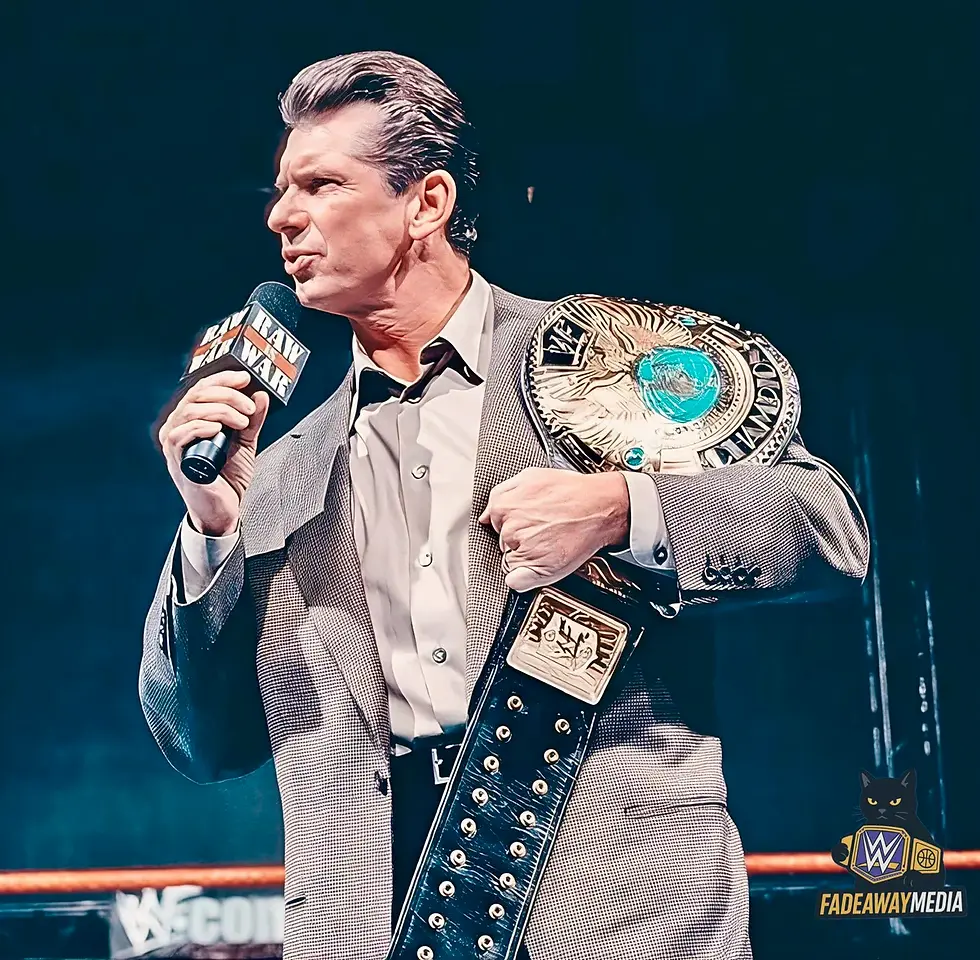
An in-depth analysis for VIM Agencies | vimagencies.com
How Vince McMahon revolutionized storytelling, audience engagement, brand development, and content distribution—and what modern marketers can learn from his approach.
Introduction: The Man Who Understood the Power of a Story
In the modern marketing landscape, brands compete for attention across social media, streaming platforms, podcasts, digital advertising, and an increasingly fragmented entertainment ecosystem.
Consumers are exposed to thousands of marketing messages every day. Capturing their attention is difficult. Keeping them engaged is even harder.
Yet, long before TikTok, Instagram Reels, YouTube Shorts, and influencer marketing became dominant forces, Vince McMahon understood a fundamental principle of successful marketing: people don't simply buy products or watch programs—they connect with stories, personalities, emotions, and experiences.
As the longtime leader of World Wrestling Entertainment (WWE), McMahon helped transform a regional professional wrestling promotion into a global sports-entertainment brand.
His approach combined entertainment, character development, controversy, spectacle, strategic promotion, media partnerships, and relentless content production.
From WrestleMania to the Attitude Era, from larger-than-life performers to the creation of the Mr. McMahon character, his career offers a fascinating case study in how content can become a powerful marketing asset.
However, understanding McMahon's business legacy requires looking beyond his achievements. His leadership and creative methods were also controversial, and WWE's success involved the contributions of numerous performers, executives, writers, producers, and business partners.
For marketers, the most valuable lessons come from examining the strategies behind WWE's ability to attract attention, create emotional investment, and turn entertainment into a recognizable global brand.
At VIM Agencies, where creativity, digital marketing, and brand communication intersect, these lessons offer practical insights into developing content that audiences actively seek out rather than passively encounter.
1. The Vision: Turning Professional Wrestling into Entertainment
From regional promotion to global brand
In 1982, Vince McMahon acquired his father's wrestling business, then operating under the Capitol Wrestling Corporation structure.
Over the following decades, he pursued an ambitious strategy to expand professional wrestling beyond its traditional regional market.
Rather than treating wrestling as a collection of local live events, McMahon increasingly positioned it as a national and international entertainment product.
This transformation involved several interconnected strategies:
Expanding television distribution.
Building recognizable personalities.
Creating major, tentpole entertainment events.
Developing merchandise and licensing opportunities.
Establishing national and international brand recognition.
Connecting wrestling with mainstream popular culture.
WWE's own historical records document the company's expansion during the 1980s and the creation of WrestleMania as a major entertainment property. (WWE)
The marketing lesson
Many companies sell products or services without creating a larger narrative around them.
McMahon's approach demonstrated the value of thinking beyond the immediate product.
Instead of simply promoting wrestling matches, WWE promoted:
Rivalries.
Personalities.
Championships.
Historic moments.
Cultural events.
Anticipation for future shows.
The product became more than the individual event.
It became an ongoing story that encouraged audiences to return.
What modern brands can learn
A business should ask:
"What larger story does our product belong to?"
A digital marketing agency, for example, should not simply promote social media management services.
It can build a broader narrative around:
Entrepreneurial ambition.
Business transformation.
Digital innovation.
Client success.
The future of marketing.
The evolution of consumer behavior.
The service is the product.
The story is what gives the product meaning.
2. WrestleMania: The Power of Creating a Marketing Event

One of Vince McMahon's most important contributions to WWE's marketing strategy was the development of WrestleMania.
The first WrestleMania took place on March 31, 1985, in New York.
The event featured wrestling stars alongside recognizable entertainment personalities, including musician Cyndi Lauper and actor and entertainer Mr. T. Muhammad Ali also played a prominent role as a special guest referee.
WWE's historical account identifies the relationship between wrestling and MTV during this period as an important part of the company's effort to connect with a broader popular culture audience. (WWE)
The strategy behind the spectacle
WrestleMania was not marketed merely as another wrestling card.
It was positioned as a major entertainment occasion.
This distinction matters.
Compare the following approaches:
Traditional promotional approach:
"Join us for a night of professional wrestling."
Event-driven marketing approach:
"Experience one of the biggest entertainment events of the year."
The second approach creates a stronger sense of occasion.
It encourages audiences to plan around the event, discuss it with others, and feel that missing it means missing something important.
The marketing principle: Create moments, not just messages
Modern brands can apply this strategy by turning ordinary promotions into recognizable events.
Examples include:
Industry | Standard Promotion | Event-Based Marketing |
Retail | Seasonal discount | Annual shopping festival |
Technology | Product announcement | Product launch experience |
Restaurants | Menu promotion | Signature food and culture event |
Digital marketing | Service advertisement | Annual digital growth summit |
B2B services | Sales campaign | Industry insights and networking event |
E-commerce | Flash sale | Branded shopping experience |
The objective is to give the audience a reason to pay attention at a specific moment.
Great marketing does not merely communicate availability. It creates anticipation.
3. Character Development: Why Personalities Can Become Powerful Brands
One of McMahon's most influential content strategies involved the development and promotion of memorable wrestling personalities.
WWE performers were not marketed exclusively through their athletic performances.
They were also presented through:
Distinctive personalities.
Unique visual identities.
Memorable catchphrases.
Personal conflicts.
Origin stories.
Character transformations.
Relationships with other performers.
This approach turned performers into recognizable entertainment brands.
The importance of emotional identification
Consider the different ways audiences might respond to a character:
Admiration.
Excitement.
Dislike.
Sympathy.
Curiosity.
Anticipation.
Surprise.
Each emotion can contribute to audience engagement.
A character who generates a strong reaction is more likely to become a topic of conversation.
That conversation can extend beyond the original content.
The Mr. McMahon character
One of the most notable examples was McMahon's own on-screen persona, commonly known as Mr. McMahon.
The character drew on his public identity as a powerful wrestling executive and transformed it into a dramatic antagonist.
This created an unusual relationship between the person behind the company and the entertainment product itself.
The executive became part of the storyline.
The storyline, in turn, became a marketing vehicle.
The character's conflicts with performers such as Stone Cold Steve Austin helped define a significant period in WWE's programming.
The broader historical record of WWE's late-1990s programming illustrates how character rivalries became central to the company's content strategy. (Wikipedia)
The lesson for brand marketing
A company does not necessarily need a celebrity founder to benefit from personality-driven branding.
It can develop recognizable brand voices through:
Founders.
Employees.
Industry experts.
Content creators.
Customer success stories.
Brand ambassadors.
Community leaders.
For example, a digital marketing agency might build a content series around a recognizable marketing expert who explains industry trends in a distinctive style.
Over time, that personality can become associated with the agency's expertise.
People often remember the person delivering the message before they remember the company delivering it.
4. Storytelling: Turning Individual Content Pieces into an Ongoing Narrative
One of WWE's defining characteristics under McMahon was its ability to produce continuing storylines.
A match was rarely presented as an isolated event.
It was often connected to a broader narrative involving:
Previous confrontations.
Personal disagreements.
Championships.
Alliances.
Betrayals.
Career ambitions.
Unresolved conflicts.
This created a reason for audiences to return to future programming.
The episodic content model
WWE's television programming demonstrated the value of serialized entertainment.
A storyline could develop over several weeks or months, with each episode contributing another piece of the narrative.
This approach resembles many successful modern content strategies.
WWE Storytelling Element | Modern Marketing Equivalent |
Weekly television episodes | Recurring content series |
Long-term rivalries | Ongoing customer problems and solutions |
Character development | Brand or founder storytelling |
Major pay-per-view event | Product launch or campaign climax |
Unexpected plot twist | Creative campaign reveal |
Championship pursuit | Long-term customer success journey |
Fan reactions | Community engagement and feedback |
The marketing lesson: Give audiences a reason to come back
A business blog that publishes disconnected articles may struggle to build a loyal readership.
A more strategic approach is to create content ecosystems.
For example, VIM Agencies could develop a recurring series titled:
"The Future of Digital Marketing."
The series could include:
Emerging social media trends.
The psychology of consumer engagement.
Artificial intelligence in marketing.
The economics of content creation.
Case studies of successful campaigns.
Interviews with marketing professionals.
Predictions and strategic considerations for the coming year.
Each article stands on its own.
Together, they create an ongoing editorial narrative.
This approach can strengthen audience familiarity and encourage repeat visits.
5. The Power of Controversy and Conflict in Audience Engagement
Conflict was a central component of WWE's storytelling model.
Heroes and antagonists were often placed in direct opposition, creating dramatic tension.
The audience was encouraged to care about the outcome.
From a marketing perspective, this highlights an important psychological principle:
People are often more interested in stories involving tension, disagreement, and meaningful stakes than in messages that simply present information.
This does not mean that businesses should manufacture controversy.
It means that content can become more compelling when it addresses genuine challenges and opposing perspectives.
The difference between controversy and meaningful debate
Consider the following examples.
Weak content approach:
"Our marketing services are effective."
More engaging approach:
"Why do some businesses spend thousands on advertising without generating meaningful results?"
The second example introduces a problem.
It creates curiosity.
It invites the audience to consider whether their own business may face the same challenge.
How businesses can use constructive tension
Brands can build engaging content around questions such as:
Is your marketing budget producing measurable results?
Are you prioritizing reach over customer loyalty?
Does your website convert visitors into customers?
Are you creating content for people or simply for algorithms?
Is your brand adapting to changes in consumer behavior?
Are you measuring the right performance indicators?
These questions create intellectual tension without relying on manufactured conflict.
An important limitation
Controversy can attract attention, but attention does not automatically translate into trust, sales, or long-term brand value.
WWE's provocative creative style was influential, but it also generated criticism and reputational challenges.
Modern marketers should distinguish between engagement that strengthens a brand and attention that damages credibility.
6. Cross-Promotion: How McMahon Connected Wrestling to Popular Culture

During the 1980s, WWE pursued partnerships that connected professional wrestling with mainstream entertainment.
One of the most notable examples was the relationship between WWE and MTV.
The collaboration helped bring wrestling into contact with a broader audience and contributed to the promotion of WrestleMania.
The 1984 event known as The Brawl to End It All, featuring Wendi Richter and The Fabulous Moolah alongside pop-culture involvement from Cyndi Lauper, became an important example of this crossover strategy. WWE's historical records describe the special's strong impact on MTV's early programming. (WWE)
Why cross-promotion works
Cross-promotion allows two brands to access overlapping or complementary audiences.
For example:
A fitness brand partners with a sports personality.
A technology company collaborates with a popular content creator.
A restaurant works with a local entertainment brand.
A marketing agency partners with a business publication.
A clothing company collaborates with a musician.
The underlying strategy is to introduce a brand to people who may not have encountered it through traditional advertising.
Audience transfer and brand association
When two brands collaborate successfully, each may benefit from:
Increased exposure.
New audience access.
Greater cultural relevance.
Additional content opportunities.
Enhanced brand recognition.
Shared promotional resources.
However, partnerships work best when the participating brands have a credible connection.
A collaboration should feel relevant rather than forced.
The VIM Agencies application
VIM Agencies could use cross-promotion to create content partnerships with:
Business leaders.
Entrepreneurs.
Dominican and Caribbean creators.
Technology companies.
Marketing educators.
Tourism and hospitality brands.
E-commerce businesses.
A joint video, podcast, webinar, or research report can generate content for multiple platforms.
One strategic partnership can become an entire content campaign.
7. Content Distribution: Why Creating Great Content Is Only Half the Job

One of McMahon's most significant strategic achievements was recognizing that content distribution was essential to the growth of WWE.
Producing an entertaining program was not enough.
The program had to reach audiences through the right channels.
WWE expanded its television presence, pursued media partnerships, developed international distribution, and later invested in digital content and streaming initiatives.
In a historical account of McMahon's promotional achievements, WWE described its global broadcast reach as extending to numerous countries and languages. Such historical figures should not be treated as current distribution statistics. (WWE)
The modern content distribution ecosystem
Today, businesses can distribute content through a wide range of channels.
Channel | Primary Marketing Opportunity |
Website | Search visibility and long-form authority |
YouTube | Educational and entertainment video |
Visual storytelling and community building | |
TikTok | Short-form discovery and cultural participation |
Professional authority and B2B engagement | |
Email marketing | Direct audience relationships |
Podcasts | Extended conversations and thought leadership |
Digital advertising | Targeted audience acquisition |
Webinars | Education and lead generation |
The objective is not to publish identical content everywhere.
The objective is to adapt a central idea to the strengths of each platform.
One idea, multiple content formats
Imagine VIM Agencies publishes a detailed article titled:
"The Future of Artificial Intelligence in Digital Marketing."
That single article can become:
A YouTube explainer.
Five short-form videos.
A LinkedIn carousel.
An Instagram infographic.
A podcast discussion.
An email newsletter.
A downloadable industry guide.
A series of social media posts.
A webinar presentation.
This is a content repurposing strategy.
It allows a business to extract more value from the research and creative work invested in a single topic.
The lesson from WWE
WWE built its business around the idea that the same intellectual property could support multiple forms of entertainment and commercial activity.
Modern brands can apply a similar principle to their own intellectual property:
Research.
Original insights.
Educational content.
Brand stories.
Video series.
Proprietary frameworks.
Industry reports.
The most valuable content is often content that can be adapted, distributed, and reused strategically.
8. The Art of Creating Anticipation
One of the most effective features of WWE's promotional model was its ability to create anticipation for future events.
Major matches and storylines were often promoted well in advance.
Audiences were given reasons to wonder:
Who would win?
What would happen next?
Would a rivalry escalate?
Would an alliance survive?
Would a championship change hands?
Anticipation helped turn future programming into a subject of discussion.
Anticipation as a marketing tool
Modern businesses can use the same principle when promoting:
New products.
Service launches.
Major events.
New content series.
Research reports.
Business announcements.
Seasonal campaigns.
Instead of revealing everything at once, a brand can build a structured promotional sequence.
Example: A product launch campaign
Phase 1: Awareness
Introduce the problem the product addresses.
Phase 2: Curiosity
Reveal selected details about the upcoming solution.
Phase 3: Education
Explain how the product works and who it benefits.
Phase 4: Demonstration
Show the product in action.
Phase 5: Launch
Make the product available.
Phase 6: Follow-up
Share customer experiences, frequently asked questions, and additional educational content.
Why this works
A structured campaign gives audiences multiple opportunities to encounter the brand.
It also allows marketers to evaluate interest at different stages.
For example:
Video views can indicate initial awareness.
Website visits can indicate curiosity.
Email sign-ups can indicate interest.
Product demonstrations can indicate consideration.
Purchases can indicate conversion.
Anticipation alone does not guarantee success.
The product or service must ultimately deliver value.
9. Branding Through Visual Identity and Consistency

WWE's brand identity was reinforced through recognizable visual and audio elements.
These included:
Distinctive logos.
Event graphics.
Entrance music.
Championship designs.
Stage presentations.
Performer costumes.
Television production styles.
Repeated visual themes.
These elements helped make WWE content recognizable across different media environments.
Why visual consistency matters
A brand's visual identity can help audiences recognize it before they read its name.
This is particularly important in social media environments where users scroll rapidly through large amounts of content.
For a digital marketing agency, visual consistency can involve:
Typography.
Brand colors.
Graphic design.
Video editing.
Motion graphics.
Photography.
Presentation templates.
Social media layouts.
The VIM Agencies opportunity
A strong visual identity can help VIM Agencies communicate a consistent brand personality across its website and digital channels.
For example, the agency could establish recognizable visual systems for:
Educational content
Clean layouts, data visualization, and professional design.
Creative campaigns
Bold graphics, motion, and storytelling.
Industry analysis
Charts, statistics, and editorial presentation.
Client success stories
Professional photography, testimonials, and measurable results.
Video content
Consistent opening sequences, typography, and editing conventions.
The objective is not to make every piece of content identical.
It is to ensure that different content pieces feel as though they belong to the same brand.
10. Audience Engagement: Building a Community Around Content
WWE's business model was built around an active fan base.
Audiences did not simply watch matches.
They discussed performers, debated storylines, collected merchandise, attended live events, and participated in a broader entertainment community.
This demonstrates the difference between an audience and a community.
An audience consumes content.
A community participates in a shared interest.
For modern marketers, community development can be a powerful long-term strategy.
A brand community might include:
Customers.
Industry professionals.
Fans.
Business owners.
Entrepreneurs.
Content creators.
Employees.
Brand advocates.
How to build a marketing community
Businesses can encourage participation through:
Questions and polls.
Live broadcasts.
Online events.
Industry discussions.
Customer-generated content.
Community newsletters.
Exclusive educational resources.
Expert interviews.
Interactive workshops.
Engagement should go beyond vanity metrics
A large number of followers can be useful, but follower counts alone do not reveal the strength of a community.
More meaningful indicators may include:
Repeat engagement.
Audience retention.
Comments that demonstrate genuine interest.
Content sharing.
Email subscriptions.
Event attendance.
Customer referrals.
Community participation.
In a 2013 discussion of WWE's social media approach, Stephanie McMahon emphasized the importance of keeping storylines active beyond television through digital engagement. Her comments illustrate the company's effort to extend its entertainment ecosystem across the week. (Inc.com)
The marketing lesson
A brand should not ask only:
"How many people saw our content?"
It should also ask:
"How many people want to hear from us again?"
11. The Economics of Intellectual Property: Content as a Long-Term Asset
One of the most important lessons from WWE's development under Vince McMahon is the commercial potential of intellectual property.
A successful character, storyline, event, or brand concept can generate value across multiple channels.
WWE's intellectual property ecosystem
WWE's business historically involved more than television programming.
Its commercial activities included:
Live events.
Media rights.
Merchandise.
Licensing.
Sponsorships.
Video content.
Character-related products.
Digital experiences.
This approach illustrates how entertainment companies can build interconnected revenue opportunities around recognizable intellectual property.
What this means for modern marketing agencies
Agencies often create valuable content for their clients, but much of that content is produced as a one-time campaign asset.
A more strategic approach is to develop content that can become a long-term brand resource.
Examples include:
Original research.
Annual industry reports.
Proprietary marketing frameworks.
Educational video libraries.
Signature podcasts.
Branded events.
Industry newsletters.
Customer case study collections.
Over time, these assets can strengthen brand authority and support multiple marketing initiatives.
The intellectual property question
Instead of asking:
"What content should we publish this week?"
Consider asking:
"What content asset can we create this year that will continue generating value for years to come?"
This is a shift from short-term content production to long-term content development.
12. Innovation and Risk-Taking: The Importance of Challenging Established Models
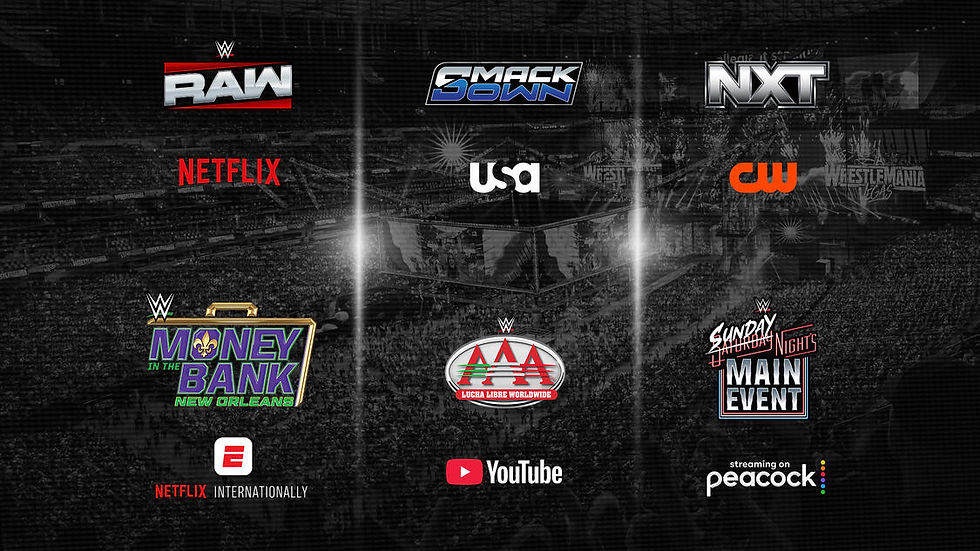
McMahon's career was marked by significant changes to the traditional wrestling business.
He expanded the company's geographic reach, developed large-scale entertainment events, embraced mainstream media partnerships, and pursued new approaches to content distribution.
Some initiatives succeeded more clearly than others.
The broader lesson is that businesses operating in competitive markets must evaluate whether established practices remain effective.
Innovation requires more than creativity
Successful innovation involves several elements:
Identifying changes in audience behavior.
Understanding emerging distribution channels.
Evaluating potential commercial opportunities.
Investing in experimentation.
Measuring results.
Adjusting strategies when necessary.
In 2013, WWE announced a business plan that identified the rising value of content, digital initiatives, and potential changes to its media distribution model as important areas of development. (WWE Corporate)
The modern marketing equivalent
Digital marketing agencies operate in an environment where:
Social media algorithms change.
Artificial intelligence alters content production.
Consumer attention shifts between platforms.
Search behavior evolves.
Video consumption increases.
Privacy regulations affect advertising.
New media formats emerge.
A strategy that worked two years ago may not deliver the same results today.
For VIM Agencies, innovation could involve experimenting with:
AI-assisted content workflows.
Interactive websites.
Personalized marketing campaigns.
Original video programming.
Data-driven creative testing.
Immersive brand experiences.
New approaches to B2B storytelling.
Innovation should be guided by audience needs, creative experimentation, and measurable business outcomes.
13. The Importance of Marketing Timing
Timing was a critical component of WWE's entertainment model.
A dramatic announcement, surprise appearance, storyline development, or major event was often designed to generate an immediate audience reaction.
The timing of a message could influence its impact.
The same principle applies to modern marketing.
Content timing has multiple dimensions
Cultural timing
Connecting a campaign to relevant cultural conversations.
Seasonal timing
Publishing content when a target audience is preparing to make purchasing decisions.
Commercial timing
Promoting products or services when demand is likely to be strongest.
Editorial timing
Releasing content in a sequence that makes sense for the audience.
Real-time timing
Responding quickly to relevant developments.
An example
Suppose a marketing agency wants to promote digital advertising services to retailers.
Publishing a campaign six months before a major shopping season may support long-term awareness.
Publishing practical advertising guidance closer to the shopping season may support immediate planning and demand generation.
The best timing depends on the product, audience, industry, and campaign objective.
The key question
"Why should our audience see this content now?"
If the answer is unclear, the content may need a stronger strategic context.
14. The Role of Data in Creative Marketing
Vince McMahon's public legacy is particularly associated with creative direction and entertainment strategy.
However, successful modern marketing requires more than creative instinct.
It requires measurement.
A business needs to understand whether its content is producing the intended results.
Important content marketing metrics
Objective | Relevant Metrics |
Brand awareness | Reach, impressions, branded search activity |
Audience engagement | Comments, shares, saves, engagement rate |
Video performance | Watch time, completion rate, retention |
Website traffic | Sessions, unique visitors, traffic sources |
Lead generation | Form submissions, qualified leads, conversion rate |
Sales | Revenue, customer acquisition cost, return on ad spend |
Audience loyalty | Repeat visitors, returning viewers, subscriptions |
Content efficiency | Cost per asset, production time, asset reuse |
Creative content and measurable results
A compelling video may generate millions of views.
But if the campaign's goal is to generate qualified business leads, views alone may not indicate success.
Likewise, a highly educational article may receive modest traffic while producing valuable inquiries from a specific target audience.
This is why marketers should establish campaign objectives before selecting performance indicators.
The VIM Agencies approach
VIM Agencies can help clients connect creative storytelling with business outcomes by integrating:
Content strategy.
Audience research.
Creative development.
Campaign distribution.
Performance tracking.
Conversion optimization.
Reporting and analysis.
Creativity attracts attention. Strategy gives that attention direction. Measurement helps determine whether the strategy is working.
15. What Modern Brands Should—and Shouldn't—Borrow from Vince McMahon
Vince McMahon's career provides a substantial case study in entertainment marketing, but not every aspect of his leadership or creative approach should be replicated.
His business achievements coexisted with controversies involving workplace culture, leadership practices, and personal conduct.
Documentaries and reporting have examined the tension between WWE's carefully managed entertainment narratives and the realities surrounding its leadership. These issues are relevant when evaluating his overall legacy. (TIME)
For marketers, the appropriate approach is to separate useful strategic lessons from practices that may create ethical, operational, or reputational risks.
Strategies worth examining
1. Building recognizable brands
Create distinctive identities that audiences can remember.
2. Investing in storytelling
Develop narratives that give products and services context.
3. Creating signature events
Turn important promotions into experiences.
4. Developing recurring content
Give audiences reasons to return.
5. Using cross-platform distribution
Adapt content for different channels.
6. Building strong intellectual property
Develop assets that generate value over time.
7. Creating emotional connections
Understand what audiences care about.
8. Testing new ideas
Experiment with emerging formats and technologies.
Practices that require caution
Manufactured controversy
Attention gained through controversy can create long-term reputational costs.
Excessive centralization
A business that depends too heavily on one individual can face operational and creative vulnerabilities.
Inconsistent brand positioning
A brand must ensure that its messaging aligns with its stated values.
Audience manipulation
Effective storytelling should inform, entertain, or inspire without relying on deception.
Ignoring organizational culture
Creative success does not eliminate the need for ethical leadership and a healthy workplace.
The goal is to learn from effective strategies while maintaining professional standards and protecting long-term brand trust.
16. How VIM Agencies Can Apply These Lessons to Modern Content Marketing
The most practical way to study McMahon's marketing approach is to translate its underlying principles into a contemporary agency framework.
Below is a proposed content strategy inspired by the broader lessons of WWE's entertainment model.
The VIM Signature Content Framework
Step 1: Establish a central brand narrative
Define what the company represents.
For VIM Agencies, this could involve a focus on:
Creativity.
Marketing innovation.
Digital transformation.
Measurable business growth.
Strategic communication.
The brand narrative should guide the content produced across platforms.
Step 2: Create recurring content series
Develop recognizable editorial properties.
Potential examples include:
VIM Marketing Intelligence
Analysis of industry trends, data, and consumer behavior.
Behind the Campaign
Breakdowns of marketing strategies and creative executions.
The Growth Conversation
Interviews with entrepreneurs and business leaders.
Digital Marketing Explained
Educational content for business owners.
The Creative Brief
Discussions of branding, advertising, and content development.
Step 3: Develop signature campaigns
Create major campaigns that generate attention and provide a central focus for smaller content pieces.
Examples include:
An annual digital marketing report.
A regional marketing conference.
A social media trends campaign.
A marketing innovation challenge.
A series of business growth workshops.
Step 4: Build recognizable content personalities
Feature experts who can become familiar and trusted voices.
These may include:
Agency strategists.
Creative directors.
Data analysts.
Business consultants.
Industry guests.
Entrepreneurs.
The objective is to make complex subjects more accessible through human communication.
Step 5: Build content ecosystems
Transform major content assets into multiple formats.
For example:
One research report can become:
A long-form article.
An infographic.
A video presentation.
A podcast discussion.
A social media series.
A webinar.
An email campaign.
A downloadable resource.
This increases opportunities for discovery and engagement.
Step 6: Create audience participation opportunities
Encourage people to become active participants.
Potential methods include:
Interactive polls.
Live Q&A sessions.
Audience surveys.
Industry debates.
Marketing challenges.
User-generated content.
Community newsletters.
Participation can help a brand better understand its audience while strengthening relationships.
Step 7: Measure and optimize
Track performance against specific objectives.
Review:
Content reach.
Audience retention.
Engagement quality.
Website traffic.
Lead generation.
Customer acquisition.
Conversion rates.
Return on marketing investment.
Use the findings to improve future campaigns.
17. A Practical Content Campaign Inspired by WWE's Storytelling Principles
To illustrate how these ideas could work in practice, consider a hypothetical VIM Agencies campaign.
Campaign title:
"The Future of Business Growth"
Campaign objective
Position VIM Agencies as a knowledgeable source of information and strategic insight for businesses seeking to improve their marketing performance.
Campaign duration
Eight weeks.
Target audience
Small and medium-sized businesses.
Entrepreneurs.
Marketing managers.
Business executives.
E-commerce companies.
Service-based businesses.
Campaign structure
Week | Content Focus | Primary Format |
1 | Why traditional marketing approaches are changing | Long-form article and video |
2 | The changing role of social media | Infographic and short-form videos |
3 | How AI is affecting content creation | Expert interview |
4 | The importance of customer experience | Case study |
5 | How to measure marketing performance | Educational webinar |
6 | Common mistakes in digital advertising | Video series |
7 | Building a sustainable content strategy | Downloadable guide |
8 | The future of business growth | Final report and live discussion |
Supporting content
Each week's main topic could generate additional material for social media, email, and video channels.
Campaign measurement
The campaign could track:
Article readership.
Video completion rates.
Webinar registrations.
Email subscriptions.
Qualified leads.
Content downloads.
Website conversions.
Audience feedback.
The campaign's success should be assessed according to its defined objectives rather than simply its total number of views.
18. The Future of Content Marketing: What McMahon's Legacy Can Teach Us
The marketing environment has changed dramatically since Vince McMahon began expanding WWE.
Audiences now consume content through smartphones, connected televisions, streaming platforms, social networks, and digital communities.
Artificial intelligence is also changing how businesses research, produce, personalize, and distribute content.
Despite these technological changes, several fundamental principles remain relevant.
People respond to meaningful stories
Technology can improve content production, but it does not automatically create emotional resonance.
Memorable brands require differentiation
Businesses need recognizable identities and clear value propositions.
Consistency builds familiarity
Audiences are more likely to recognize brands that communicate consistently.
Distribution matters
Even excellent content needs an effective path to its intended audience.
Communities create long-term value
A loyal audience can become an important source of feedback, referrals, and repeat business.
Attention is not the same as trust
A successful campaign should consider both immediate engagement and long-term brand reputation.
Innovation requires adaptation
Brands must respond to changes in technology, audience preferences, and market conditions.
Conclusion: The Enduring Marketing Lessons of Vince McMahon
Vince McMahon's impact on the entertainment business extends beyond professional wrestling.
Through WWE, he helped demonstrate how storytelling, recognizable personalities, major events, cross-promotion, brand identity, and content distribution could work together to create a powerful entertainment ecosystem.
His career offers marketers an opportunity to study the mechanics of audience engagement on a large scale.
The most important lessons include:
Create stories that audiences want to follow.
Build recognizable brands and personalities.
Turn important campaigns into memorable events.
Use multiple platforms to distribute content strategically.
Create content assets that generate value over time.
Encourage audience participation.
Combine creativity with measurable objectives.
Experiment with new ideas while protecting brand trust.
For modern agencies, the central takeaway is straightforward:
The strongest content marketing strategies do more than promote products. They create experiences, establish relationships, and give audiences reasons to return.
That is one of the most valuable principles that can be explored through Vince McMahon's extraordinary—and often controversial—career in entertainment.
At VIM Agencies, the opportunity is to apply these principles to a new generation of brands, using creativity, technology, strategic thinking, and data to create content that delivers meaningful business value.
Because in a world competing for attention, the brands that know how to tell compelling stories are often the brands that people remember.
About VIM Agencies
VIM Agencies is a marketing and creative services brand focused on helping businesses strengthen their digital presence through strategic communication, content creation, branding, and marketing solutions.
Visit vimagencies.com to explore marketing insights, creative services, and strategies for growing your business in the digital economy.


Comments